 ZW News HD
“Why are you sorry? Why are you sorry, Patience?”
BY Mahnoor | 10-05-2026
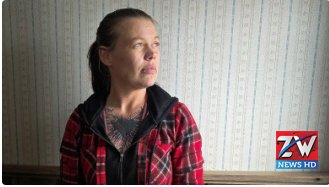
Patience Rousseau, 26, was cold on her doorstep with her two kids as the police officer asked her again.
Body camera video shows that a sheriff’s deputy in Humboldt County, Nevada, questioned Rousseau about a Facebook post she made a few weeks prior. The post expressed her sadness about her stillborn baby and mentioned the name she gave the baby after its death.
“I’m so sorry, Abel,” Rousseau wrote in the post.
In May 2018, the mother was shocked when police officers, some with special equipment, arrived at her home in the countryside near Winnemucca to execute a search warrant.
“I lost my baby, okay? I had a miscarriage. Why are you here because of a miscarriage?” Rousseau said to the officer.
The single mom, who already had trouble paying for her two young sons, felt conflicted and guilty about her unexpected pregnancy and the baby she lost, her lawyer stated. Rousseau informed the officers that she had been consuming lots of cinnamon and lifting heavy objects while pregnant, hoping to cause a miscarriage.
Police officers went to a red cross with Abel’s name on it, located in a green area behind the house. They dug up the body and took it to a police car, according to the police video and report.
Two days later, Rousseau was arrested. She was charged with a serious crime: felony manslaughter. This happened in Nevada, where abortion is legal. Legal experts say she was charged under a law that is not clear. This law makes it a crime for a woman to take drugs to end her pregnancy. She was also charged with hiding a birth, which is a less serious crime. But she was not found guilty of that charge.
Rousseau’s situation is part of a growing trend where women are being treated as criminals. This is happening even in states where abortion is legal. Prosecutors are using old laws or laws not meant to punish pregnant women or those who have lost a pregnancy or given birth. These laws include abuse of a corpse, child neglect, or even homicide, according to abortion law experts who spoke with CNN.
“There’s a strong push to treat how pregnancies end, along with abortions, as crimes,” said Karen Thompson, the legal director at Pregnancy Justice, a nonprofit organization.
Experts say there’s been a rise in these cases, separate from those tied to tougher abortion laws, since the Supreme Court ended the federal right to abortion in 2022. The U.S. had a record number of people charged with crimes related to pregnancy in the first year after that decision, according to Pregnancy Justice data.
Rousseau felt the whole experience was awful, from the baby’s death to her arrest. She told CNN, “I thought I was doing the best I could, but then I was told I was wrong after dealing with everything by myself. Being punished without any mental health support has really hurt me.”
Rousseau spent over two years in prison before her conviction was canceled in 2021. The judge said her public defender was too busy and didn’t properly advise her to plead guilty. She received a $100,000 settlement this past February, according to court papers.
Judge Charles McGee wrote a strong opinion, saying Rousseau’s case is one of the worst examples of justice failing completely.
“I didn’t get why they were there.”
Before prison, Rousseau’s life was always changing, from her many moves to the different jobs she held.
At 14, she claimed she could insulate houses “better than most men” and put together roofs while wearing high heels. Rousseau has worked many jobs, such as bartending, cleaning cars, and cleaning hotels and Airbnbs.
She loved being a taxi driver for 15 years. She was a good listener and helped people who needed someone to talk to.
But Rousseau says she needed help the day the police came to her door.
Rousseau was crying on the porch steps, arms crossed. Police officers were talking to her, the 2018 video shows. They said they were trying to find out if the baby she lost was developed enough to be considered viable.
Jacqueline Mitcham, who was a deputy at the time, questioned her. Mitcham asked how big her stomach was, had her show the baby’s size with her hands, and wondered why she didn’t phone 911.
“I didn’t want to end up in the hospital,” Rousseau said. “Who would look after my children?”
She kept telling the officers she didn’t know how pregnant she was and hadn’t done anything wrong. She said she was just resting in bed when the baby was born dead.
“Have you thought much about why that happened?” Mitcham asked.
The mother said she tried to cause a miscarriage. She admitted to eating cinnamon because she read online it could end a pregnancy naturally. She also told police her car often broke down and she had to push it.
Later, doctors said there was no proof that what Rousseau did caused the baby to be stillborn. The judge mentioned this when he canceled her conviction.
Rousseau’s case is complex because women often feel guilty after a stillbirth or miscarriage, especially if they had unsure feelings about the pregnancy, according to her lawyer Laura Fitzsimmons, who worked to overturn Rousseau’s conviction.
The woman told police that she had scheduled an abortion at a Reno clinic, which was 165 miles away. But her car broke down, leaving her stuck in a small town with no way to get there. She already had two kids, no job, and no help from loved ones. Because she had been homeless and poor, she felt unable to care for another child.
Mitcham asked if she did drugs. Rousseau said she only smoked marijuana.
Rousseau was used to facing tough times. She said she was abused as a child and as an adult. Growing up, she moved many times, living in different towns in South Dakota, Colorado, Wyoming, and Washington.
Rousseau said she always tried to make the most of what she had. She worked hard to pay for daycare while struggling to find a cheap place to live, so she and her kids wouldn’t have to live in a car.
But the day the police came is one of the worst she remembers. Rousseau said she saw them dig up Abel’s body.
“I didn’t get why they were around or what I did to deserve such bad treatment,” Rousseau said.
She also had to remember the awful night she lost her baby. She sadly told police two days after they came to her house that she woke up bleeding and hurting, tried to save the baby with CPR, and buried him in the yard.
The mother tried to describe the shock and fear she felt that night. She had even wished to lose the baby because she couldn’t afford another child.
She told the police, “It’s hard to get diapers and milk. We haven’t had food for two weeks since no one can drive us to town.”
At the end of the interview, she would be arrested for manslaughter. Footage showed her crying and begging the officers as they took her away, insisting she did nothing wrong.
The charges state she illegally caused the death of an unborn child by hitting her stomach and/or taking drugs or other substances.
The Humboldt County Sheriff’s Department wouldn’t discuss Rousseau’s case with CNN. They said Mitcham doesn’t work there anymore.
Since her case, more women have faced criminal charges because of their pregnancy outcomes.
The 1911 law Rousseau was charged under is so vague that many things, like smoking marijuana or cigarettes, or even taking something like cinnamon, could lead to a conviction, according to Fitzsimmons and Farah Diaz-Tello, a lawyer for a reproductive rights group that helped Rousseau. Rousseau’s case is not unique.
Cases of women being charged for miscarriages, stillbirths, or abortions they performed themselves are increasingly common in several states, says Diaz-Tello, who notes that these cases now make up a large portion of the cases at her firm, If When How.
Moira Akers is one of the women. In 2022, she got 30 years in prison for second-degree murder and 20 years for child abuse leading to death. This was after her baby was stillborn at home, according to Diaz-Tello, whose firm defended Akers during the trial.
Akers was found guilty in Maryland, where abortion is legal. Prosecutors said her internet searches about abortion early in her pregnancy and her not getting prenatal care were important evidence for the charges of murder and child abuse, according to court papers.
Diaz-Tello said that, like Patience’s case, this case is based on prejudice, not facts. People consider abortion for many reasons early in pregnancy, and deciding whether or not to continue a pregnancy is normal.
The Maryland Supreme Court overturned Akers’ conviction, and she will have a new trial this summer, according to Diaz-Tello.
The Howard County State’s Attorney’s Office, which is handling the case, told CNN that Akers is accused of killing her newborn baby and hiding the body in her closet. Because the trial is ongoing, the office said it cannot provide more information.
In 2023, Brittany Watts was charged with a serious crime for mistreating a body after she miscarried and left the nonliving fetus at her Ohio home, court records say. A year later, a grand jury dropped the case, finding that there wasn’t enough evidence to charge Watts, according to the Trumbull County Prosecutor’s office.
In the two years after the Roe v. Wade decision was reversed, there were at least 412 criminal cases linked to pregnancy, pregnancy loss, or childbirth. Most of these cases targeted low-income individuals, and almost all involved accusations of drug use during pregnancy, according to Pregnancy Justice. These cases occurred in both liberal and conservative states, but most were in Alabama and Oklahoma.
Thompson and Diaz-Tello said these cases happen as reproductive rights face more opposition, driven by anti-abortion ideas and the stigma around it, though there’s no single type of law being used.
A report says that prosecutors often charge pregnant people using laws that don’t need proof that they truly hurt the fetus or baby. Data shows that most of these cases in the last two years involved charges of child abuse, neglect, or endangerment.
Thompson, who runs a legal aid group, says three of her clients are facing murder charges because they had a stillbirth.
A judge described Rousseau as an ‘anti-Christ.’ Fitzsimmons, a lawyer who defended abortion rights in a 1990 Nevada vote, was about to retire.
Then, she learned about Rousseau’s case from a former Planned Parenthood employee.
Fitzsimmons said she got a call about a woman in Nevada prison for ending her pregnancy. At first, she didn’t believe it was possible. She was wrong.
She began representing Rousseau for free in 2020. After looking into the case, she believed it was a great opportunity to get the conviction overturned and filed a complaint.
Fitzsimmons presented medical experts in 2021 who stated there was no scientific proof linking Rousseau’s actions in pregnancy to the baby’s death.
Dr. Laura Knight, the medical examiner, estimated the fetus was 28 to 32 weeks old at the time of autopsy. However, she testified that it was impossible to confirm the exact age, cause of death, or whether the baby showed any signs of life after the stillbirth.
A report found methamphetamine in the baby’s tissue, but a doctor testified that this, along with Rousseau’s marijuana use, lifting heavy items, and taking cinnamon pills, wouldn’t cause a stillbirth or early labor, even combined.
Another doctor, Mishka Terplan, mentioned Rousseau’s difficult past and said that obstacles stopped her from getting an abortion, which is sadly common. Terplan stated that Rousseau’s situation deserves sympathy and support, not punishment.
Court papers show that Rousseau’s initial lawyer said he had too many cases when he was representing her. Judge McGee said the lawyer took full responsibility, admitting in court to every mistake, missed defense, and poor strategy.
McGee overturned Rousseau’s conviction because her lawyer didn’t do a good job, and also because Rousseau didn’t know how old the fetus was.
Patience has been called a bad person, but this judge believes she’s simply a mother trapped by poverty and without any help.
McGee said that to prove manslaughter, the prosecutors needed to show Rousseau knew she was ending the pregnancy after 24 weeks. But they couldn’t prove she knew she had gone too far.
The judge canceled Rousseau’s earlier guilty plea, saying she might have been forced into it.
Rousseau told CNN she felt forced to plead guilty “to something I knew I didn’t do… It still haunts me, even though I’ve been cleared.
” Her lawyer, Fitzsimmons, said Rousseau waited about three years, unsure if she’d be charged and have to go to trial again. Finally, on April 7, 2025, Judge Michael Montero dismissed the case, despite the district attorney’s disagreement.
The Humboldt County District Attorney wouldn’t comment to CNN.
Abel’s body was taken to the deputy’s house.
Fitzsimmons said Deputy Mitcham was known to Rousseau. Officers came to Rousseau’s house with a search warrant because a babysitter she used was Mitcham’s friend.
Mitcham wrote in the police report that the babysitter sent her a screenshot of Rousseau’s Facebook post. This led her to check medical records, but she found no signs of pregnancy or OB/GYN visits.
During the 2021 hearing, Mitcham said she felt sorry for Patience because Patience didn’t have much choice or support. Mitcham, who had a one-year-old child, said the case affected her deeply and still troubles her.
she enjoys outdoor activities with her kids, like camping, fishing, gardening, and going to Orman Dam Lake. They’re making a big garden together, and her sons are growing strawberries and watermelons.
After getting out, the mom had another son and now works steadily at a gas station in Sturgis, South Dakota. She also helps take care of drag strips for races. When she’s not working.”I own seven trees, including a very special yellow maple in my yard,” she stated.
Her face brightens when she discusses watching her kids grow and their love for animals, like their turtle, gecko, fish, and five dogs.
For five years, she’s spoken to Fitzsimmons weekly. She gets emotional, saying her lawyer was the only one who believed in her when “nobody else did, and that was incredibly important.”
Rousseau is still figuring out how to tell her three sons, who are three, nine, and eleven years old, about what she experienced. She said she’ll wait until they’re old enough to really understand.
“I want my sons to see women as equal to them,” she said. “I came home, I never quit, and I always fought for them to stay together, and that’s always been my aim,” she said.
Rousseau hopes that sharing her story will highlight the need for more support for women in her situation. Through tears, she urged, “No matter what, don’t lose hope. I almost gave up because I didn’t think I could escape my situation. No one should feel that way.
” Rousseau stated, “We need people who understand us, who realize we’re not perfect and that we face challenges. Sometimes we need people to understand this enough to pull us closer instead of pushing us away, and truly support us for once.
” She added, “If everyone abandons us women, there’s nothing left worth living for, because we shape the world. We create and nurture new life.”
