 ZW News HD
Fuel Price Hike and Government Role: Causes, Impact & Solutions
Introduction
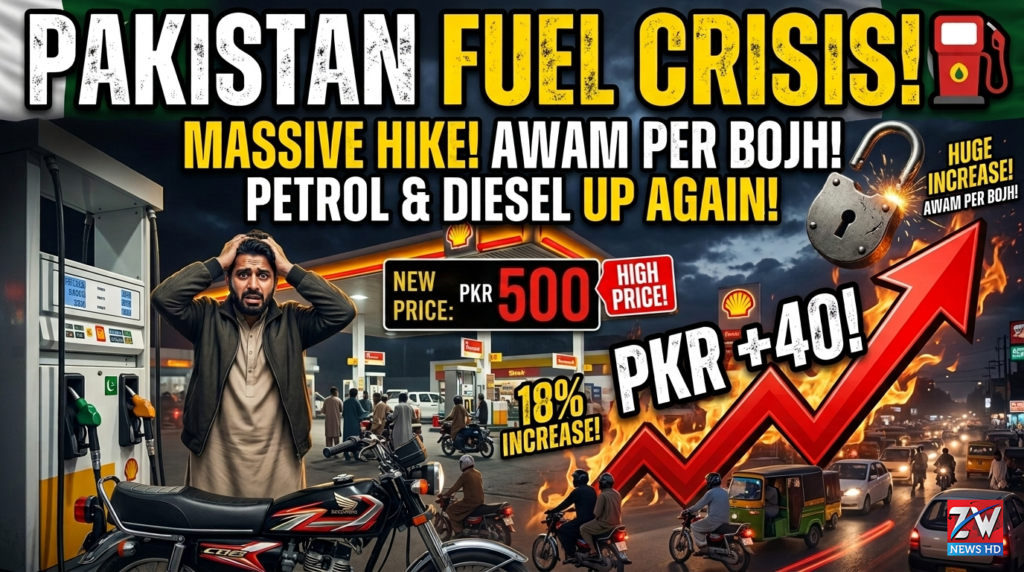
The fuel price hike has become one of the most discussed economic issues in Pakistan and many other countries. Every increase in petrol and diesel prices directly affects the daily life of citizens, transportation costs, food prices, and overall inflation.
Fuel is the backbone of any economy. When its price rises, it creates a chain reaction across all sectors. In this article, we will explore the reasons behind fuel price hikes, the role of the government, and possible solutions to control the impact.
BY Mahnoor | 05-May-2026
What is Fuel Price Hike?
A fuel price hike refers to an increase in the cost of petroleum products such as petrol, diesel, and kerosene. These changes usually occur monthly or weekly based on global oil prices, currency exchange rates, and government taxation policies.
Main Causes of Fuel Price Hike
1. Global Oil Prices
The biggest factor is the international crude oil market. When global oil prices increase, importing countries face higher costs.
2. Currency Exchange Rate
If the local currency weakens against the US dollar, fuel imports become more expensive.
3. Government Taxes and Levies
Governments apply petroleum development levies, customs duties, and sales taxes, which directly affect fuel prices.
4. Import Dependency
Countries that depend heavily on imported fuel are more vulnerable to price fluctuations.
5. Geopolitical Situations
Wars, sanctions, and political instability in oil-producing countries can disrupt supply and increase prices.
Government Role in Fuel Price Hike
The government plays a crucial role in determining fuel prices and controlling their impact on the public.
1. Price Regulation
Governments review international oil prices and adjust local rates periodically.
2. Tax Adjustment
Reducing taxes on fuel can help lower prices, while increasing taxes generates revenue but raises costs.
3. Subsidies
In some cases, governments provide fuel subsidies to reduce burden on citizens.
4. Economic Stabilization
Authorities try to balance fuel prices with inflation control and economic stability.
5. Strategic Reserves
Some governments store oil reserves to manage supply shocks and price spikes.
Impact of Fuel Price Hike on Economy
Transportation Costs
Public and private transport becomes more expensive.
Food Prices
Delivery costs increase, leading to higher prices of groceries and essential goods.
Industrial Production
Factories face higher production costs, reducing profit margins.
Inflation
Overall inflation rises, affecting purchasing power of citizens.
Public Life
Middle and lower-income families are most affected by rising fuel costs.
Government Challenges
Managing fuel prices is not easy for governments due to:
- Dependence on international oil markets
- Limited foreign exchange reserves
- Pressure from IMF and global financial institutions
- Domestic inflation control needs
- Political pressure from citizens
Possible Solutions to Control Fuel Price Hike
1. Increase Renewable Energy Usage
Switching to solar, wind, and hydro energy reduces dependency on oil.
2. Local Oil Refining
Improving local refineries can reduce import costs.
3. Public Transport Expansion
Better transport systems reduce fuel consumption.
4. Tax Reforms
Balanced taxation can help stabilize fuel prices.
5. Energy Conservation Awareness
Public awareness campaigns can reduce unnecessary fuel usage.
Conclusion
The fuel price hike is a global issue influenced by multiple economic and political factors. While governments play a key role in controlling prices, long-term solutions lie in reducing dependency on imported oil and adopting sustainable energy sources.
A balanced approach between taxation, subsidies, and economic planning is necessary to protect citizens from rising fuel costs.
