 ZW News HD
Related Articles

Rather than increasing production, the government is focusing on increasing taxes.
BY Mahnoor | 22-06-2026
ISLAMABAD: A strong nation needs three things: a powerful military, smart diplomacy, and a solid economy. Pakistan has made great progress in its military and diplomatic relations. Two recent events have made the country even stronger.
First, the success of Operation Bunyan Marsoos proved that Pakistan has a powerful military. This improved Pakistan’s reputation worldwide. Other countries now want to work closely with Pakistan’s military. Our leaders have been invited globally to share their knowledge. This success also made it easier to sell military gear and fighter jets. For example, the defense agreement with Saudi Arabia grew from this victory. Many nations are now eager to work with Pakistan on security and military matters.
At the same time, Pakistan gained a major advantage by acting as a middleman between Iran and the US. Pakistan helped stop a fight just as the world feared a major war was starting.
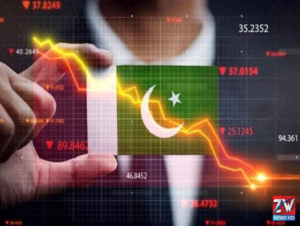
After President Trump made threats against Iran, Pakistan stepped in to arrange a ceasefire, which led to peace talks in Islamabad. This was a huge event that prevented a nuclear war. Many see Prime Minister Shehbaz Sharif and Field Marshal Asim Munir as leaders who saved the day during a crisis. However, Pakistan’s economy is weak, which prevents it from being a global power. Even though there were attempts to improve industry and farming in the 1960s, Pakistan still mostly sells basic raw materials. Manufacturing is struggling, making up only about 20% of the economy. The textile industry is the main business, providing 60% of exports, but it depends too much on government help and has failed to create famous global brands.
Pakistan’s engineering sector is weak and makes very few types of products. It accounts for only 4.8% of the country’s exports, which is very low. Pakistan does not export modern machines, electronics, or IT goods; instead, it mostly exports cutlery, surgical tools, and home appliances.
Relying so heavily on textiles is worrying because it goes against global trends. Worldwide, engineering goods make up over 50% of trade, while textiles only make up 3.6%. This shows that Pakistan cannot grow its economy or exports by only focusing on textiles.
Agriculture is a vital part of the economy. While it could help the country export goods, the sector is struggling. Farmers are facing hard times due to high costs, poor quality supplies, low selling prices, and climate change. Bad government policies and poor management have also failed to support them. Although agriculture is tough, it cannot survive these constant problems. As a result, Pakistan now has to buy most of its food from other countries.
The government is making things worse instead of fixing them. Rather than helping production grow, they are just raising taxes. Pakistan is becoming a country that relies too much on taxes. It feels like the government’s only goal is to collect more money by taxing the same people harder, instead of finding new taxpayers. This breaks basic economic rules. The famous thinker Ibn Khaldun advised lowering tax rates while adding more people to the tax system. Additionally, the current tax system is too difficult to use.
The government is also selling off valuable assets and relying too heavily on taxes to run the country, which is a bad strategy. To succeed, the government must fix real problems rather than using quick, temporary fixes. They need to do two things: change the economic focus and fix bad management. First, they should move from just making textiles to making engineering goods, which could sell well globally. This should be done carefully, starting with easy wins and gradually moving to more difficult goals.
In the near future, Pakistan should focus on selling items like cutlery, surgical tools, and fans. Pakistan is already good at making these, but it needs to sell them to more countries. At the same time, it should export more farm products by improving transport, storage, and quality standards.
Success now will help later. In the long run, Pakistan should focus on two areas: manufacturing and farming. In manufacturing, it should prioritize IT, mobile phones, chemicals, laptops, and cars. In agriculture, it should focus on food production and making sure food reaches markets easily.
Pakistan has great chances to fix its economy. The main opportunity is the China-Pakistan Economic Corridor (CPEC) and a new plan with China. Pakistan also agreed to sell more farm products to China, which is a $60 billion market. Additionally, Pakistan can get money from Gulf countries, especially Saudi Arabia.
To succeed, Pakistan must focus on three things. First, it must invest in teaching and training people. Second, it needs to help businesses grow large and create famous brands. Third, it must fix how the country is run. Instead of small, temporary fixes, Pakistan needs deep and complete changes.
The government created the Special Investment Facilitation Council (SIFC) to help businesses grow. However, SIFC has mostly failed to meet its goals, despite a few small wins. This is because it is run by government officials and military officers who lack expertise in economics or business. Additionally, SIFC lacks the freedom to work effectively. Trying to make SIFC succeed is like entering a horse with tied legs into a race and expecting it to win; it simply cannot compete.
The text shows that Pakistan can fix and grow its economy. However, to succeed, it must solve its current problems. If the economy does not improve, military and political wins will not last, and Pakistan will not become a major power. Therefore, fixing the economy must be Pakistan’s main goal to become a global leader.
Also watch this :