


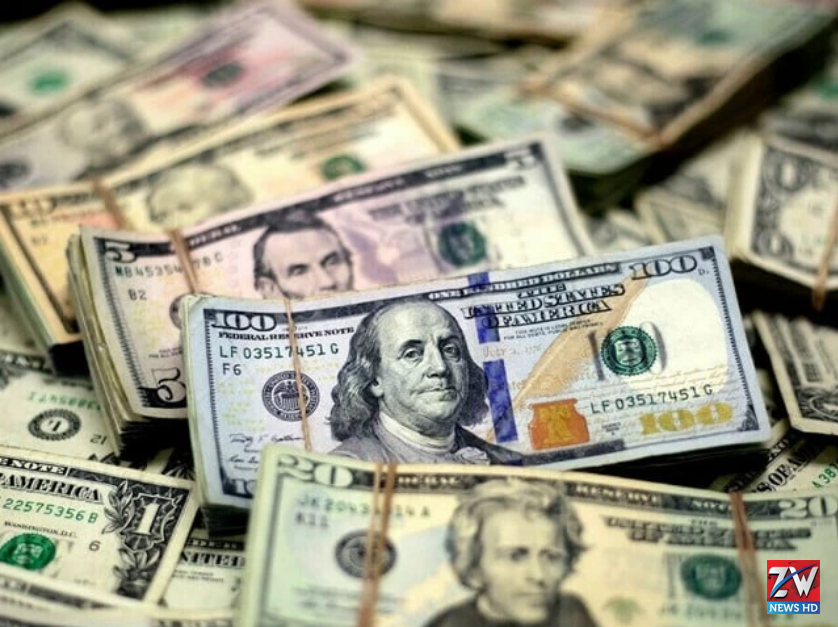
24 billion dollars were used for the budget and paying back debts as money earned from exports dropped to 30 billion dollars.
BY Mahnoor | 18-07-2026
ISLAMABAD: In the last fiscal year, the coalition government borrowed about $27 billion from outside partners. This includes $9 billion in renewed loans from China and Saudi Arabia. Most of this money was used to pay for the government’s budget, settle old debts, and build cash reserves in foreign currencies, according to official data.
A report from the Ministry of Economic Affairs, shared on Friday along with other news, shows that foreign loan amounts went up compared to the previous year, rather than going down.
A report from the Ministry of Economic Affairs states that Pakistan received $16 billion in new foreign loans for the fiscal year ending June 30, 2025-26. Additionally, the country received $2.2 billion from the IMF, $5 billion from Saudi Arabia, and $4 billion from China. The Ministry did not report these three large payments.
Of the total $27.2 billion borrowed, $24 billion was used for general government expenses, paying off existing debts, and adding to foreign currency reserves. Data shows that only $3.4 billion, or about 13%, went toward actual projects.
As of June 31, Pakistan’s central bank held $18.5 billion in foreign currency reserves. Most of this money was borrowed or rolled over from existing loans and bought from the market. This shows Pakistan relies more on foreign lenders, making its economy weaker.
In the last fiscal year, exports dropped 6% to $30 billion, according to the Pakistan Bureau of Statistics. Imports were $40 billion more than exports, keeping the country dependent on foreign loans. Even with efforts to improve, foreign direct investment fell to under $2 billion.
The foreign aid numbers came out one day after Finance Minister Muhammad Aurangzeb told The Express Tribune that the country is ‘good’ on renewing another $3 billion Saudi debt taken in April this year for three months.
Saudi Arabia has put a total of $8 billion in cash into Pakistan’s central bank, charging 4% to 4.5% interest. The amount is renewed when it is due, because Islamabad still cannot pay back these loans. As the cash deposits grow bigger, the time until they are due is getting shorter.
The success of the IMF’s three-year plan also depends on extending these debts, otherwise a lack of outside money could appear, which might make it hard for the IMF to approve future loans.
China has put $4 billion in cash deposits, charging more than 6% interest. China also gave $393 million in guaranteed loans last year, mostly used to buy assets, according to official data.
Last year, Pakistan got $1 billion by issuing Panda Bonds and using private placement for Eurobonds. It sold $255 million in Panda Bonds with guarantees from ADB and AIIB because Pakistan has a low credit rating.
The finance ministry also got $1.9 billion in commercial loans: $1.7 billion from China Development Bank and $200 million from Standard Chartered Bank in London.
The ADB gave out $1.8 billion, about $400 million less than the year before. All multilateral groups together gave $7 billion, including $2.6 billion from the IMF. But the Economic Affairs Ministry recorded only $421 million, and the other $2.2 billion for helping the balance of payments was not on the disbursement list.
The World Bank released almost $2 billion in the last fiscal year.
The Islamic Development Bank paid out $1 billion, and Saudi Arabia gave $1 billion through an oil loan with 6% interest. But the loan ended in April this year, and now Pakistan is asking for a $6.7 billion, 15-year agreement.
Pakistan’s debt compared to its economy and its need for money compared to its economy are now too high. If a country needs to borrow more than 15% of its economic output, it is seen as unsustainable. The finance ministry’s earlier guesses show that Pakistan will stay above that level for at least a few years.
For the new budget year, the IMF says Pakistan will need $21.2 billion from outside. For the next budget year, the need is $30 billion – a time when Pakistan will not be in the IMF program, which ends in September next year.
The government also got more than $3 billion in loans from the Naya Pakistan Certificate plan, which is another costly way of borrowing.
Pakistan’s bank account showed a small loss of $139 million in the last financial year, changing from a gain of $1.84 billion the year before, the central bank’s data says. Even with record money sent home by workers, Pakistan’s foreign balance became negative because of high imports.
Also watch this :
Oil prices go up because fighting gets worse in the Middle East.




Leave a comment