

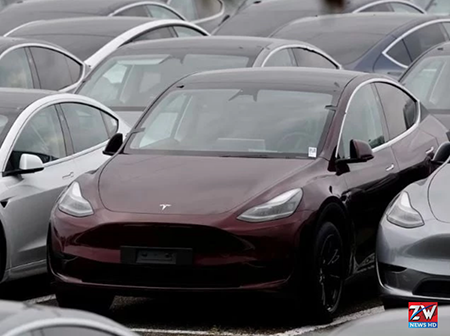
About half of China’s 1.3 million taxis are electric, according to the Ministry of Transport.
By Mahnoor | 16-07-2026
China has a growing shield against oil price jumps: electric taxis.
In Chinese cities, taxi use and ride-sharing are rising fast. In May, people made 3.05 billion trips, and government data shows trips grew 6% from March to May compared to last year, since the Iran war started in late February.
The price drop shows a strange thing about China’s transport: ticket prices are going down even though gas prices are going up. Experts say many new drivers are looking for jobs in a slow economy, and cheap electric cars are reducing prices. This brings in passengers who want to save on high gas costs.
A part-time ride-hailing driver in Beijing, named Li, said prices have fallen 10% to 15% since he started six months ago. “Competition is intense,” the 36-year-old told Reuters at an electric car charging station.
The other side can be seen on social media. Since gas prices started going up in March, many posts say that taking a taxi or rideshare costs less than driving.
‘Especially when gas prices are high, I prefer to take a taxi to places too far to bike. That way, I don’t need to find parking or pay for gas,’ said Yang, a 45-year-old owner of a gas car, who only gave her last name.
As taxis become electric, the boom in ride-hailing shows that China’s transportation is becoming less affected by oil crises, like if the Strait of Hormuz were closed.
About half of China’s 1.3 million taxis are electric, and in big cities it’s almost all of them.
Didi, the biggest ride-hailing app, said it added two million more hybrid or electric cars last year, making its total non-gasoline fleet eight million cars, with electric cars doing 75% of all miles.
As a result, China used 10% less gasoline and 14% less diesel in May than a year before, even though truck traffic went up 2% and road travel during the May Day holiday reached a record high.
Greenpeace says that by 2035, almost all taxi and ride-hailing trips will be in electric cars.
Daizong Liu, the East Asia director at the Institute for Transportation & Development Policy in China, said, “Because fuel prices have increased, people are using their own gas cars less.”
But overall, more people want to travel, so they are using public transport like taxis and subways more often.
Will it stay?
That flexibility partly explains how China has managed to cut oil imports by 41% in June compared to a year ago, without doing it extensively. By doing so, China has freed up oil shipments in a war-limited global market and helped.
“The conflict may have sped up changes in behavior that were already happening, making China structurally less dependent on oil than what the market has traditionally expected,” JP Morgan analyst Natasha Kaneva wrote in a note on July 2.
This possibility will be tested as prices for transport fuels in China return to levels seen before the war.
JP Morgan thinks people will use less gasoline in 2027, but the drop will be slower than this year. They predict a decrease of 50,000 barrels each day compared to this year’s drop of 150,000 barrels daily.
Zhang, who is 45 years old and owns an electric car and a hybrid car, said she drives her hybrid using battery power when gas prices are high.
“When I saw prices drop recently, I took my hybrid to fill the tank,” she said.
Also watch this :
Group asks for quick investigation into leaked A-Level exams













Leave a comment