


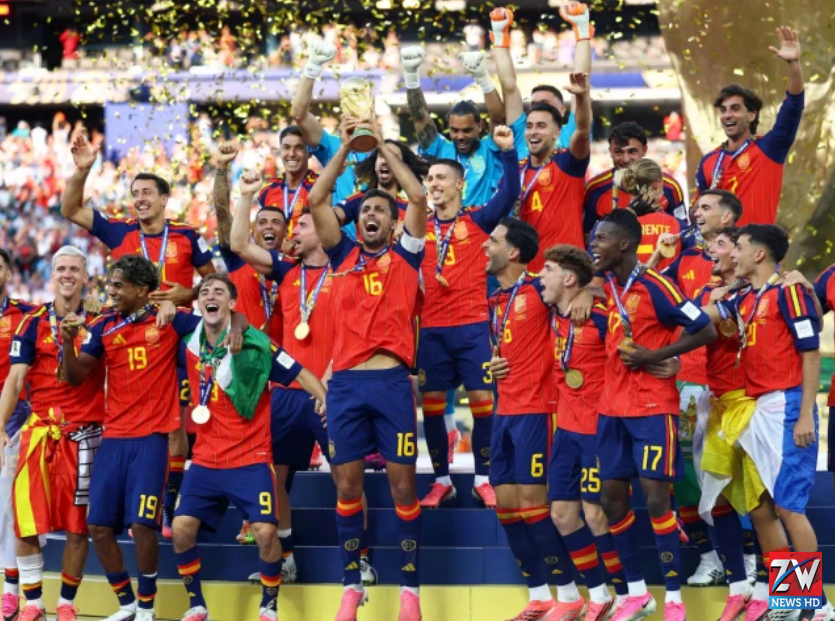
Spain passed, examined, protected, and spoiled the ball as if it were a national treasure.
BY Mahnoor | 20-07-2026
Spain went through the whole range of football styles on Sunday, from smooth to rough, from pure to tough, and still ended up exactly where they wanted to be — World Cup champions, with the ball at their feet and belief in their hearts.
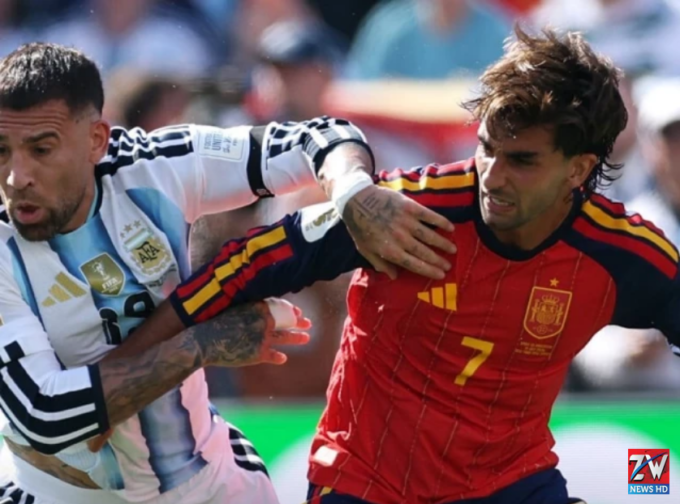
Their 1-0 win over Argentina was not a big change from their style but a messy confirmation of it. Spain passed, probed, protected, and treated the ball like it was a national treasure, refusing to panic as Argentina held strong, and the clock moved towards the end of extra time.
In the end, it was fitting for a team built on the idea that no player is bigger than the whole. The winner came from the bench. Substitutes Nico Williams and Ferran Torres set it up and scored. This was the third time in the knockout rounds that a substitute had scored the decisive goal for Spain.
That said more about Luis de la Fuente’s team than any fancy tactical diagram. This is not a team of soloists who demand the spotlight. It is an orchestra where even the late arrivals know the tune by heart.
Spain had the ball more than 65% of the time, shot 12 times on goal, and made more than twice as many successful passes as Argentina. Argentina’s first try—which missed the goal—came near the end of extra time. Spain controlled the game, but didn’t destroy their opponent.
They still had to work hard. Their usual problem—not having a traditional center forward—was shown by the many chances they made but couldn’t score.
But if not having a powerful scorer is their weak spot, it is almost the only problem for a team that is otherwise very confident together. Spain won all the individual awards:
Pau Cubarsi was Best Young Player, Unai Simon Best Goalkeeper, and Rodri Most Valuable Player. The only award they missed was the Golden Boot, which went to France’s Kylian Mbappe.
Shared goals
Even that seemed right. Spain’s win wasn’t just about one great player. They scored 14 goals in eight games, with eight different players scoring. That was like their 2024 European Championship win, where they set a tournament record by having 10 different players score 16 goals.
Beating Argentina also made their unbeaten streak 38 matches, which beat Italy’s record and showed they’ve been the best in world football for three years.
It was also a personal win for De la Fuente, once called ‘Luis de la Who’ by Spanish media after spending most of his coaching career in Spain’s youth teams.
Now that patient training has led to the biggest prize in soccer.
This Spain also reflects the country itself, made up of different regions, accents, and identities.
Players from the Basque Country, like Mikel Oyarzabal, Simon, and Mikel Merino, share the stage with Borja Iglesias from Galicia, Torres from Valencia, Rodri from Madrid, Fabian Ruiz and Gavi from Andalusia, and Pedri from the Canary Islands. Cubarsi and Marc Cucurella are two of the nine players born in Catalonia, while Lamine Yamal and Williams show the success of immigration and a newer Spain.
Spain’s wealth has always come from being made up of smaller nations, each with its own history. On Sunday, those differences did not vanish. They just stopped being problems.
Football did, for one night at least, what politics often cannot. It made Spain feel united.
Also watch this :







Leave a comment