

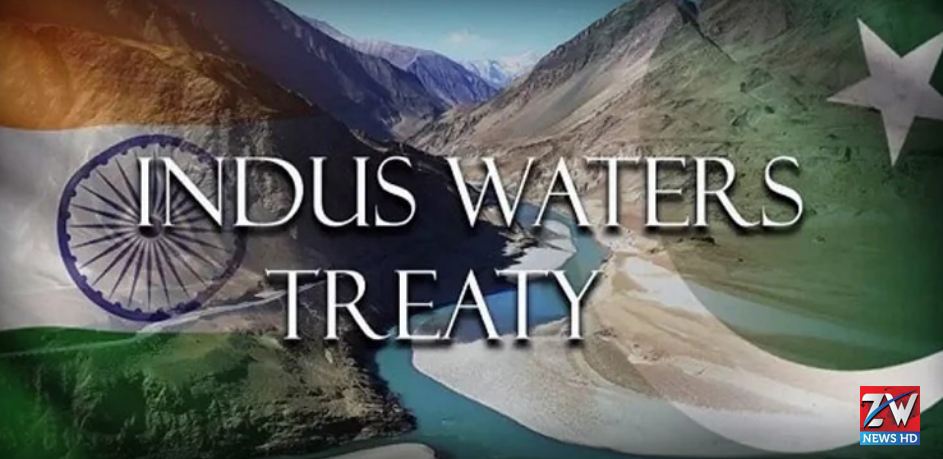
Why the Indus Waters Treaty Still Matters for Pakistan and India?
By Mahnoor | 17-07-2026
The Indus Waters Treaty, signed in 1960, was one of the first and, until April 2025, longest-lasting successes of water diplomacy after World War II. For 65 years, it was seen as proof that international organizations and law can work. US President Dwight Eisenhower even called it “one bright spot…in a very depressing world picture that we often see.” Since it stopped in April 2025, it now warns us that the rules-based world order is breaking down. This removes hope that we can fix old injustices like the Treaty once did.
The Treaty was signed between Pakistan and India to solve a water fight and undo a wrong done by Britain, the former colonial ruler. The 1948 water fight can be traced back to the Radcliffe Award of 1947.
After Britain said it would leave India faster on June 4, 1947, Sir Cyril Radcliffe came to India on July 8, 1947 to draw the borders, with only five weeks to do it. The first maps gave the Muslim-majority Ferozepur Tehsil and the Gurdaspur District to Pakistan, making Pakistan in charge of the Ferozepur and Madhupur Headworks, which are fed by the eastern rivers: Sutlej, Ravi, and Beas.
At that time, the Ferozepur Headwork supplied canals to Lahore, Sahiwal, and Bahawalpur in Pakistan, and Bikaner in India. The Madhupur Headworks watered 792,000 acres of land and provided water to 632,126 people in Pakistan. In comparison, only 389,581 people and 418,000 acres in India depended on these Headworks.
This shows that based on population and needs, Pakistan should have gotten the Ferozepur area and Gurdaspur district. But Jawaharlal Nehru was upset with the first maps, as Stanley Wolpert explains in his book ‘Shameful Flight’, so he asked Lord Mountbatten to change them. So the first maps and the Indian Independence Act of July 18, 1947 were changed to give those areas to India. This led to the water conflict of 1948 because Pakistan lost all control over the Eastern Rivers.
The first effect of the Radcliffe Award on water in the region was on April 1, 1948, one day after the Standstill Agreement and Arbitral Tribunal ended. India, to pressure Pakistan into giving up objections to Kashmir’s illegal joining and ‘to damage its economy’ (Aloy A. Michel, Indus Rivers 1967), cut off water from the Ferozepur and Madhupur dams to Pakistan. Water was later restored, but only if Pakistan paid under the Interdominion Agreement of May 1948. Pakistan, being downstream and having historical rights to water from the Eastern Rivers, was unhappy with these unfair terms and asked India to settle the issue through the International Court of Justice, but India said no.
Sometimes history is shaped by strange coincidences (or at least it seems that way to people who don’t expect them). Even though the best plans couldn’t solve the water dispute, a magazine article and a lucky reader led to the Treaty. David E. Lilienthal wrote an article called ‘Another Korea in the Making?’ about the Indus Irrigation System in Collier’s Magazine on August 4, 1951. Eugene R. Black, President of the World Bank, read it. He talked to Lilienthal and said he wanted to help make a deal between Pakistan and India. That’s how the Treaty talks started.
The Radcliffe Award made things hard for Pakistan during the talks. It left Pakistan with no advantages for the Eastern Rivers. Pakistan’s best option was to get water from the Western Rivers and find money to build the needed structures and connections for its irrigation system. It succeeded in both.
In 1948, Pakistan had to give up control of the Eastern Rivers due to a mistake by the old colonial power. Since April 2025, this problem continues because the Treaty is not being followed, stopping Pakistan from getting water from the Western Rivers. The difference between 1948 and 2025 is that in 1948, the conflict led to a win for the rule-based world order through the Treaty, but in 2025, ignoring the Treaty warns that this same order is breaking down. The world cannot afford this collapse. The resource sharing problem in the Subcontinent is just one of the first such issues; conflicts over natural resources worldwide are expected to increase as temperatures rise and new energy-heavy technologies of the fourth industrial revolution become common.
To survive these challenges, people must cooperate. This cooperation can only happen if the world follows rules. It is wise for the world to stand together and protect these rules. Restoring the Treaty would correct a historical wrong and set an important example. It would support international law and the rules-based order, giving hope in hard times. Without it, people may think that historical wrongs are rarely fixed and that efforts to help only bring short-term comfort.
Also watch this :
Iran tells the United Nations that the United States broke a signed agreement in a letter.







Leave a comment