 ZW News HD
Related Articles


Experts say the move should diversify finances, not just increase debt.
BY Mahnoor | 22-05-2026
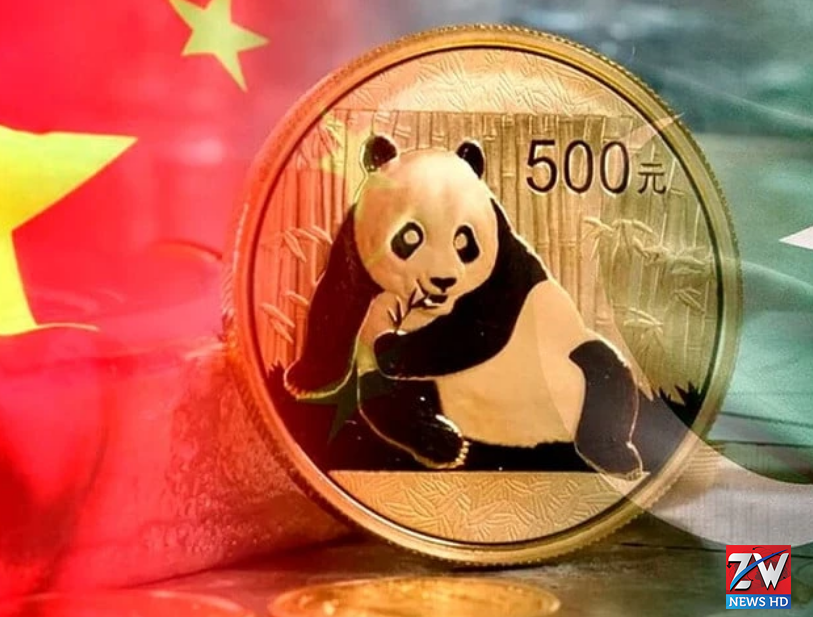
KARACHI: Pakistan has started using China’s large financial system by issuing its first Panda Bond. This creates a new way to borrow money at a lower cost and with fewer political requirements. Experts believe this could help Pakistan find different ways to get money from other countries, instead of only borrowing in dollars and euros.
Pakistan issued a 1.75 billion yuan ($250 million) bond in China at a 2.5% interest rate. This is Pakistan’s first time borrowing money directly from China, and it’s one of the cheapest loans they’ve gotten lately.
Dr. Muhammad Farooq Afzal, Founder and President of the Economic Diplomacy Forum, stated that this move would boost confidence among global investors, especially those in China, showing they’re ready to invest in Pakistan despite the risks. This will improve feelings about foreign investment, partnerships, and make it easier to fund infrastructure and trade.
The bond sale, which had five times more demand than available, is seen as a sign of trust in Pakistan’s economy. This is happening as the country tries to fix its finances with help from the International Monetary Fund (IMF), while also easing strain on its foreign currency reserves.
People familiar with the deal say this isn’t just a one-time loan, but the start of Pakistan working with China’s financial markets for a long time.
Officials say they’re already talking about possibly issuing more bonds in the next 3 to 6 months as part of a larger plan that aims to raise up to $1 billion.
The bond was strongly supported by global banks. The Asian Infrastructure Investment Bank (AIIB) and the Asian Development Bank (ADB) guaranteed 95% of it. This made the bond safer and greatly reduced how much it cost to borrow money.
Experts said the guarantee system was key in helping Pakistan get funding at much better rates than it usually does when borrowing in dollars or issuing Eurobonds.
Business leaders and economists believe the successful bond sale shows investors are more confident in Pakistan’s economic reforms after the country stabilized its economy and made IMF-supported changes.
Ahmad Jawad from the Pakistan Business Forum (PBF) stated that Panda Bonds are not just about borrowing from abroad. They help Pakistan get money from different places, instead of only relying on US dollars and the IMF.
He stated that borrowing money in Chinese yuan improves financial ties with China and allows access to a huge amount of available money. He added, “We would have lost out if we hadn’t done this.”
PBF leaders think this plan could help fund projects in energy, water, and health. It might also encourage more trade between Pakistan and China to be done in Chinese currency as their economies work more closely together.
Economists believe this deal shows that a global financial system with many currencies is slowly appearing, as countries look for options beyond just using the US dollar.
Dr. Muhammad Farooq Afzal stated that the bond gives Pakistan a good chance to find different ways to get money from other countries and rely less on expensive loans from Western sources.
He said that borrowing at 2.5% was much cheaper than what Pakistan usually pays on the international market. This could help ease the burden of paying back debt. He also said that this action shows international investors, especially Chinese banks, that Pakistan’s economy is improving and reforms are working.
Afzal says businesses trading with China might see this as a move to use more Chinese yuan in deals, instead of relying too much on the dollar.
However, he warned that cheap loans shouldn’t stop leaders from fixing Pakistan’s basic economic problems. He said, “Cheap debt is still debt,” and that the country’s debt payments and risks from outside remain big worries.
Experts say Pakistan’s exports are still not growing as fast as its imports, which means the country could face financial problems again.
Economists also say when the bonds are issued is important. Global investors are rethinking opportunities in emerging markets because of changes in world politics and finances.
China’s bond market is the second biggest globally, after the US. It’s becoming a popular place for countries to borrow money, offering diverse funding and lots of available cash. Pakistan is entering this market now because borrowing from the usual Western sources is expensive due to concerns about its financial risk and low credit scores.
Experts believe this successful launch might inspire other Pakistani organizations and government-owned businesses to consider using Chinese yuan for funding, especially for projects involving trade, infrastructure, and industrial partnerships with China.
This progress could help Pakistan get more international support for its financial projects related to regional connections.
Some experts think this bond sale is important, even though it’s not huge, because it shows Pakistan can still get investors interested despite its money problems. Financial experts point out that Pakistan still has a lot of debt, and it will need a lot of money from other countries in the next few years because it has big debts to pay back, spends more than it earns, and doesn’t sell enough goods abroad.
“The recent bond sale shows that global investors will fund Pakistan’s progress. But we must use this chance to fix the core issues that make us less competitive, causing trade deficits and a weak financial standing,” said Waqas Ghani Kukaswadia, Head of Research at JS Global.