

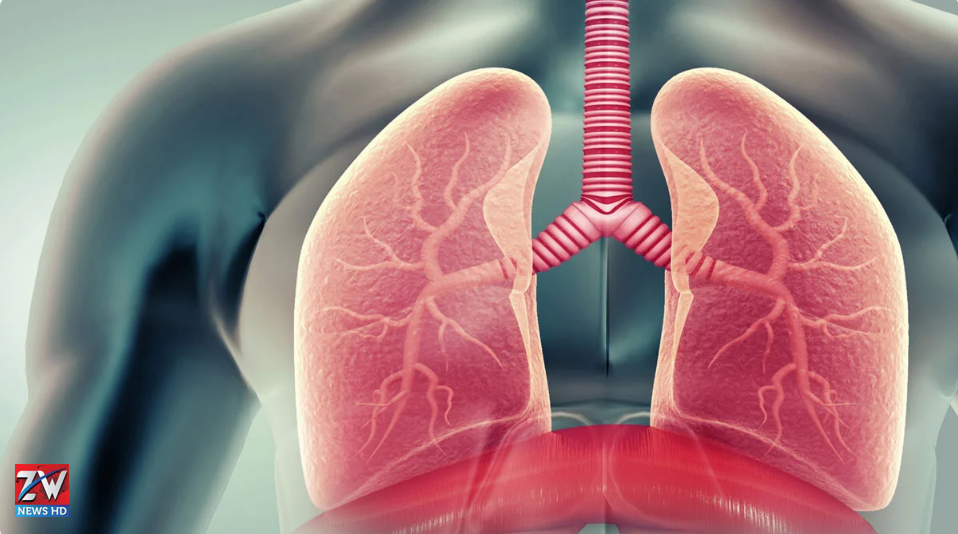
Lung transplants give new hope to some people with cancer.
By Mahnoor | 16-07-2026
We also talk about a worrying men’s health trend, and a discovery that could change what we think about human biology, based on studies in rodents.
Lung transplants might help some patients with end-stage cancer
A new study challenges the long-held rule that patients with stage IV lung cancer should not get lung transplants, at least for some patients.
Doctors tracked adults with terminal lung cancer only in their lungs who had no other treatment options and found that lung transplants led to much better early survival than medical treatment alone.
In a study reported in JAMA, 17 patients had a lung transplant and 81 got only medical care.
One year later, all transplant patients were still alive, but less than half of similar cancer patients treated with medical therapies were alive.
The researchers noted that while stage IV lung cancer usually spreads beyond the lungs, the patients in this study had a type where the cancer stays only in both lungs, even as it causes breathing failure.
Their main cause of death is often not cancer throughout the body, but the slow failure of lungs filled with cancer.
Study leader Dr. Ankit Bharat from Northwestern Medicine in Chicago said in a statement: ‘This work changes what we can imagine for a highly selected group of patients who were previously thought to be beyond the reach of curative treatment.’
Among cancer patients, the one-year survival rate was 100%. This was higher than the 88% rate for patients who got lung transplants for usual reasons. This shows that giving lungs to certain advanced cancer patients is not a waste of donated organs that are scarce.
“When cancer is clearly shown to be only in the lungs, when usual treatments are no longer working, and when the lungs are the organ that limits life, a transplant might offer a new way forward,” Bharat said.
Men are more often diagnosed with cancer at a later stage
A U.S. study shows that cancer is found later in men than in women. This might explain why men often have worse cancer outcomes, because the later cancer is found, the worse the result tends to be.
Today I will quit my job as a member of Parliament for Clacton on Sea. This will cause a special election, which I hope will happen soon.
Researchers looked at over 2.4 million cancer cases from 2015 to 2022. They found 16 cancers where men were much more likely than women to be diagnosed after the cancer had spread to nearby lymph nodes.
For example, men with tongue cancer were 151% more likely to have this regional-stage diagnosis compared to women. Other cancers with big differences were salivary gland (93% more likely), oropharyngeal (80% more likely), thyroid (74% more likely), and stomach (67% more likely). This was reported in Cancer Epidemiology, Biomarkers & Prevention.
Cancers that have spread to other organs were also more common in men than women for 17 types of cancer. The biggest differences were in melanoma and cancers of the tongue, thyroid, salivary gland, and stomach.
For a few cancer types, like larynx and bladder cancer, men were less likely than women to be diagnosed at later stages.
These patterns were true for people of different races, ethnicities, and neighborhood incomes.
One reason could be differences in cancer screening rates, study leader Beth Maclin of the U.S. National Cancer Institute said in a statement.
She noted that women visit doctors more often than men, so doctors have more chances to find cancer symptoms earlier. She also added that doctors might see cancer symptoms differently in men and women, which could lead to different tests.
Blood cell production in humans is different from that in mice, which surprised scientists
Scientists have found that the body makes red blood cells in a different way than they used to think.
This discovery changes old ideas that were mostly based on studies of animals, says Dr. Peng Ji from Northwestern University in Chicago.
Ji’s team used high-tech microscopes to watch so-called erythroblastic islands, which are known to help red blood cells grow.
‘For many years, we understood these structures mainly from studies on mice,’ Ji said. ‘Most tests used cells taken out and studied on flat surfaces, which breaks their natural structure.’
For this study, the scientists kept the natural shape of erythroblastic islands while comparing mouse and human samples directly.
The results in mice were not surprising: the erythroblastic islands formed around a special white blood cell called a macrophage, marked by the protein C1q, which sits in the middle of groups of developing red blood cells and helps clean up cell waste.
In humans, there is no organizing center.
Ji said, “In humans, red blood cells group together by themselves without needing a central macrophage. This changes a long-held belief that human blood formation is the same as in mice.”
In a report published in the journal Cell, the researchers say the discovery changes how we understand the body’s production of its most common cell type.
Ji said, ‘This is a big change in thinking. Much of medical research uses mice. If the basic biology is different, it affects how we understand diseases and create treatments.’
The results also bring up new questions about how the human body makes up for lacking a central macrophage. In mice, macrophages are key for removing the nuclei that are pushed out when red blood cells mature.
Ji said future studies will look into this and other questions.
Also watch this :
‘We should not see AI as a danger,’ Australian leader launches new AI rules











Leave a comment