 ZW News HD
Related Articles

Even after 33 years, the truth about his murder is still a mystery, though an old letter brings up new questions.
BY Mahnoor | 02-May-2026
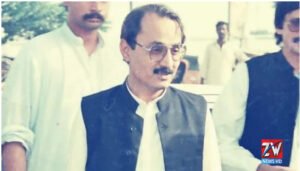
Azeem Ahmed Tariq was the first chairman of the Muttahida Qaumi Movement. — X/@SyedAminulHaque/ File
Recently, a letter from MQM’s first leader, the late Azeem Ahmad Tariq, was discovered. It was written on January 8, 1988, a few years after his marriage and five years before he was killed. The letter, addressed to his first two sons, shows how much stress he was under. He wrote, ‘I don’t know if I’ll be alive when you’re old enough to read this, but here is some advice for you.’
He had four kids total. One of them died in a car crash in the US in 2016, at age 25. I’m not sure if he ever knew about the letter his dad wrote him.
The letter showed that a top leader in MQM, second only to its founder Altaf Hussain, knew things would be tough. In the letter, he talked about his problems. It was a unique letter from a father to his young sons who couldn’t even talk yet. He wrote, ‘I don’t know if I’ll be here when you read this. But remember, I wrote this while fighting for the future of many children. Many of my friends were killed or in jail. Here’s some advice for you,’ Tariq said, speaking to them.
It was like his final wish. He told them to take care of their mother (his wife) and grandparents, and to be good people. “Try to be great human beings, not just big shots.”
Even after 33 years, no one knows who killed Azeem Ahmed Tariq. Some people were arrested. I remember Akhtar Siddiqui, a CIA inspector who became a DSP, telling the story and giving the accused’s video confessions. The case has been unsolved since then. It was the first big murder case under Gen Zia’s rule.
His widow, Naila Tariq, verified the letter and its contents, which had been lost for a while but were recently discovered. She told me that even now, she isn’t sure what he was thinking when he wrote it.
She challenged many news reports about her husband’s murder, saying, “I’m sorry, but most of what I saw on TV and social media wasn’t true.” She added that she knows the truth about that night better than anyone else.
“I was the only person who saw what happened, but no one ever wrote down what I said. Even now, after 33 years, I don’t want to talk about the details. All I’ll say is that Azeem and I were in the room when the attackers came in. They hit me on the head with a gun first, and then they shot him,” she said, her voice shaking.
Ms. Naila said that Azeem never talked about party politics with her. Even when she asked what was happening, he would smile and say, ‘Begum, I always keep my political issues away from home.’
Answering the question, she stated that shortly after the incident, two MQM leaders, S M Tariq (deceased) and Tariq Javed, visited her and suggested she not make any comments.
She said that they, and even other leaders in the party, were always kind and treated her well, except for a few people she wasn’t so sure about.
She remembers their time together fondly, saying, “Even when he was hiding in 1992, he called me almost every day. Sometimes, even his best friends would give me updates.”
“I didn’t know much about MQM’s politics and never asked him, but I noticed he seemed worried and stressed then. He even wanted to leave politics once.”
Tariq’s life involves politics, his assassination, and what happened after, including how his family now lives in another country. It tells the story of a man who might have known too many secrets.
Most of the original members of MQM were Karachi University master’s students or in medical colleges. Surviving founders or very early members include Zareen Majeed, Ahmad Saleem Siddiqi, Tariq Javed, and Aminul Haq. Senior members included Khalid Maqbool Siddiqi, Dr. Farooq Sattar, Kishwar Zehra, and others.
The MQM’s political activities mainly focused on three important leaders: Altaf Hussain (the founder), Azeem Ahmad Tariq, and Dr. Imran Farooq. Many might not know that when the original members of the All Pakistan Mohajir Students Organisation (APMSO), created in 1978, planned to turn it into a real political party, Altaf Hussain wasn’t even in Pakistan. Some people suggested Tariq as the party leader, but he suggested Hussain for the role of party founder instead.
Hussain and Tariq disagreed politically soon after the military operation started on June 19, 1992. Hussain, who had left for the UK in early January 1992 after a warning from Jam Sadiq Ali, who was the chief minister of Sindh then, led the party from London. Even before the operation, Hussain’s top assistants, Afaq Ahmad and Aamir Khan, had already caused a big split in the party.
MQM stories always persist. Many leaders have been killed, but the reasons behind these killings, especially those of key figures like Tariq and Dr. Imran Farooq, are still unclear. Will we ever know the truth? I doubt it.
Even though MQM’s political power has decreased and it’s not the strong party it once was in Sindh’s cities, there are still untold stories about what caused its downfall. Even the party’s second-in-command had to leave his ‘last wish’ for his young children.
I’m not sure how people will remember MQM, its politics, and leaders. But Tariq was surely a key leader, and his political skills might have led to his death.
